Grand Blanc Mitsubishi
New Mitsubishi and used vehicles of every make, right here at 5470 Ali Drive.
Browse Inventory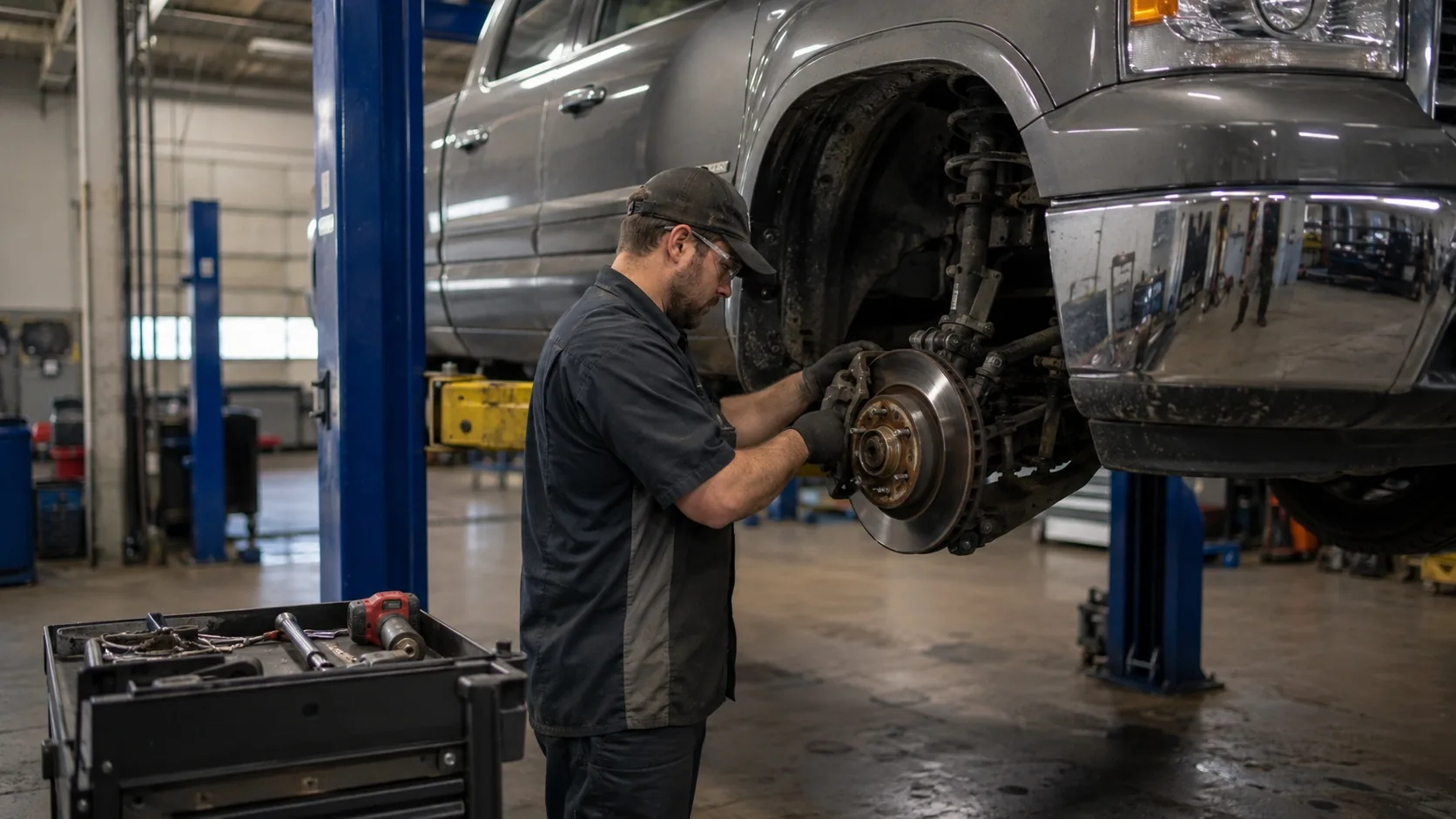
Brake Repair
The ABS light means your anti-lock braking system has found a problem, even if your regular brakes still feel normal. Here's what it means and what to do.
What’s Going On
The ABS light comes on when the anti-lock braking system detects a fault somewhere in its own components, separate from your regular hydraulic brakes. In most cases your normal braking still works fine - what's affected is the anti-lock function that helps you keep steering control during a hard stop or on a slick surface.
The most common cause is a wheel speed sensor that's dirty, damaged, or has a wiring issue. These sensors sit near each wheel and can get coated in road grime or damaged by a curb strike or pothole - not unusual after a rough winter on Grand Blanc Township roads. It can also point to a low fluid level, a fault in the ABS module itself, or a blown fuse.
If the ABS light comes on along with the regular brake warning light at the same time, that combination usually points to something more significant than a single sensor and is worth checking sooner.
How Urgent Is It?
With the ABS light alone, your regular brakes typically still work for normal stopping - you're just driving without the extra help ABS provides in a hard stop or on ice and wet pavement. It's not usually an immediate emergency, but it's not something to ignore through a Michigan winter either, when that traction assist matters most.
If the ABS light comes on with the main brake warning light, or with any change in pedal feel, treat that combination as more urgent and get it looked at promptly rather than waiting.
What to Expect
We pull the actual fault codes from the ABS module to see exactly which sensor or component triggered the light instead of guessing.
That often means checking a wheel speed sensor and its wiring for damage or buildup, along with fluid level and related connections.
Once the issue is addressed, we clear the code and verify the ABS system is functioning correctly before you drive off.
Questions
In most cases, yes, for regular driving - your normal brakes usually still work fine, since ABS is a separate system that only kicks in during hard braking or on slick surfaces. That said, you're driving without that extra safety layer, which matters more in winter conditions. It's worth getting the code checked soon rather than letting it ride indefinitely, especially before harder driving conditions arrive.
That combination usually points to something more significant than a single sensor issue, sometimes involving brake fluid level or a broader system fault, and it's worth getting checked sooner rather than later. The two lights monitor related but different systems, so seeing both on at once is a stronger signal than either one alone.
Yes, it's one of the most common causes. Road grime, brake dust, or metal shavings can build up on the sensor or its reluctor ring enough to throw off the reading, and the ABS module responds by setting a fault code and turning on the light. Sometimes cleaning it resolves it; other times the sensor needs replacing.
It might turn off temporarily if the triggering condition clears on its own, like grime washing off a sensor, but the underlying fault code usually stays stored, and the light can come back. Getting it scanned and diagnosed is a more reliable way to know the issue is actually resolved rather than just waiting for the light to disappear.
We'll scan the system and tell you exactly what triggered the light.
Also From the Lasco Family
Two Lasco stores, both a short drive away.
New Mitsubishi and used vehicles of every make, right here at 5470 Ali Drive.
Browse InventoryNew Ford trucks and SUVs, 35+ years in business, two-time Ford President’s Award winner.
Visit Lasco Ford