Grand Blanc Mitsubishi
New Mitsubishi and used vehicles of every make, right here at 5470 Ali Drive.
Browse Inventory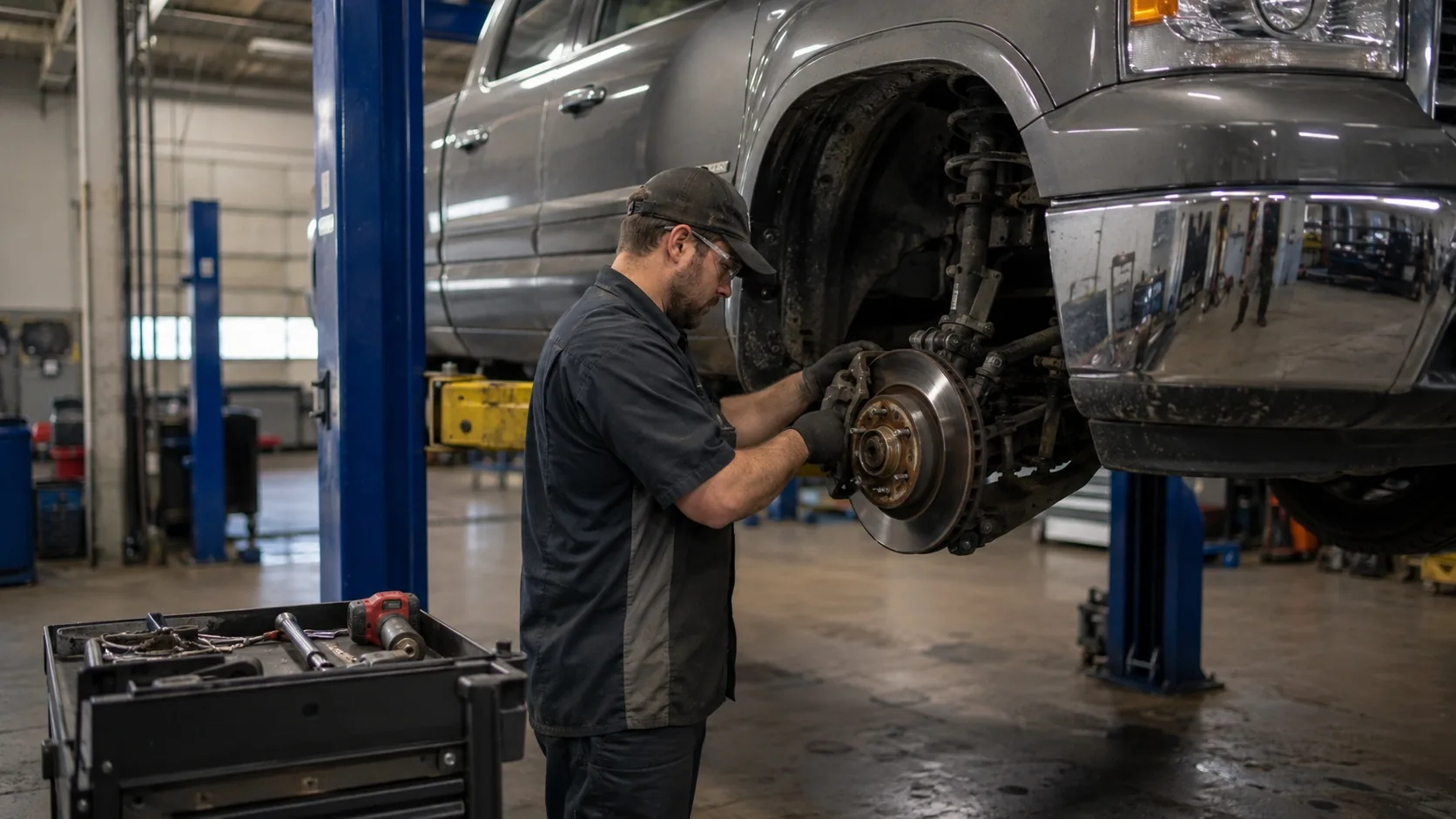
Brake Repair
A sharp, burning smell after braking usually means something's running hotter than it should. Here's how to tell what's normal and what's not.
What’s Going On
A burning smell right after braking is often just brake pads doing extra work - a hard stop, riding the brakes down a long hill, or stop-and-go traffic can heat the pad and rotor surface enough to give off a sharp smell, especially on newer pads that haven't fully broken in yet.
It can also mean a caliper isn't releasing fully, so that wheel is dragging and building heat even when you're not actively braking. You might notice that wheel feels noticeably warmer than the others, or the car feels like it's working harder than usual to get up to speed.
A burning smell that also smells sweet or syrupy is worth mentioning separately, since that's a different smell profile that can point to overheating transmission fluid rather than brakes - it helps to describe exactly what you're noticing when you bring it in.
How Urgent Is It?
A one-time burning smell after a hard stop or a long downhill stretch is usually not an emergency - it's the brakes doing their job under heavier-than-normal load. Let them cool before driving again if you can, and it's worth a check if it happens more than once under normal driving.
A burning smell on a normal drive with no hard braking involved, or a smell that keeps happening, points more toward a dragging caliper or another ongoing issue and deserves a prompt inspection rather than waiting it out.
What to Expect
We check each wheel for excess heat and test whether any caliper is dragging or failing to release fully after braking.
Overheating can glaze pads or discolor rotors, so we check whether the components still have good life left or need replacing.
Whether it's a sticking caliper, a hose restricting fluid flow, or normal heat from hard driving, we explain what we found and what it means for your car.
Questions
Yes, to a point - a hard stop, a long downhill stretch, or heavy stop-and-go traffic can heat the pads and rotors enough to produce a sharp smell, and that's generally normal brake behavior under extra load. Let the brakes cool and keep an eye on whether it happens again during normal, easier driving, which would be more worth checking out.
Brake-related burning tends to have a sharp, acrid smell and often follows hard braking or a hill, sometimes with one wheel feeling warmer than the others. A sweet or syrupy smell points more toward transmission fluid, while a smell like burning rubber can be a belt or tire. Noting exactly when the smell happens and what it smells like helps narrow it down quickly.
Yes - if a caliper isn't releasing fully, that wheel keeps dragging even when you're not pressing the pedal, which builds heat steadily during a normal drive rather than just after a hard stop. That pattern, heat and smell without obvious hard braking, is one of the more useful clues that points toward a caliper issue specifically.
If it's a one-time smell right after a hard stop or hill and everything otherwise feels normal, it's usually fine to continue carefully and let things cool down. If the smell persists, comes back on a normal drive, or is paired with a soft pedal or unusual noise, it's better to get it looked at rather than keep driving on it.
We'll check for heat, drag, and wear before you drive further.

Also From the Lasco Family
Two Lasco stores, both a short drive away.
New Mitsubishi and used vehicles of every make, right here at 5470 Ali Drive.
Browse InventoryNew Ford trucks and SUVs, 35+ years in business, two-time Ford President’s Award winner.
Visit Lasco Ford