Grand Blanc Mitsubishi
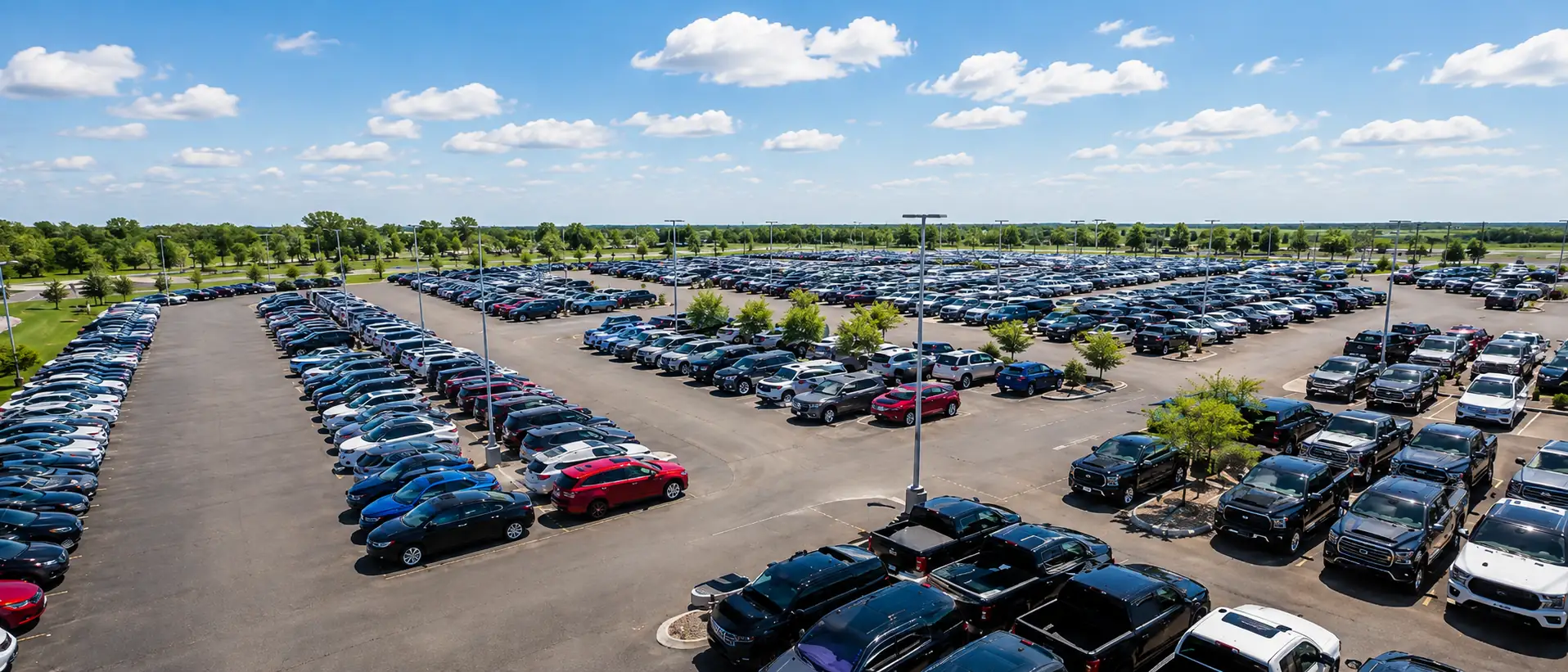
New Mitsubishi and used vehicles of every make, right here at 5470 Ali Drive.
Browse Inventory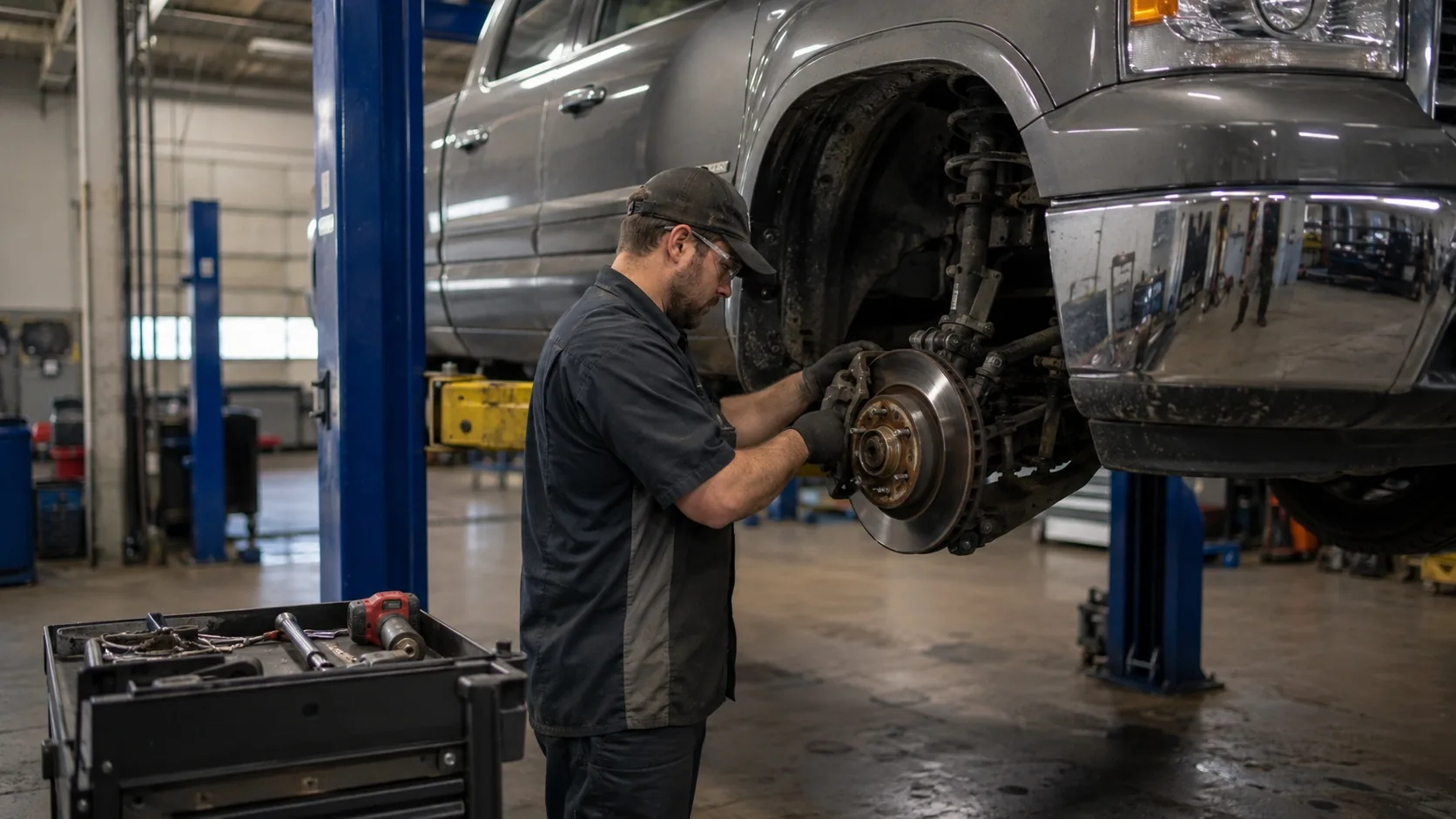
Brake Repair
That metal-on-metal sound usually means your brake pads have worn past their friction material. Here's what it means for your car and how fast to get it looked at.
What’s Going On
A grinding noise when you brake almost always means the brake pads have worn down past their friction material, so you're hearing metal grinding directly against the rotor. Most pads have a small metal wear indicator built in that makes a lighter squealing sound first as an early warning. Once that turns into a grinding sound, the pad is likely worn through and metal is making direct contact.
The other common cause is debris caught between the pad and rotor - a small rock, brake dust buildup, or surface rust that formed after the car sat for a while. Michigan winters push a lot of road salt and grit through the wheel wells, and that grit can wedge in and grind even when there's still some pad life left.
Either way, a grinding sound is your brakes telling you something has changed, and it's worth a look rather than waiting to see if it goes away on its own.
How Urgent Is It?
If the grinding is coming from worn-out pads, you're stopping with less friction material than the brakes were designed to use, and every mile you drive lets that exposed metal cut grooves into the rotor surface. A pad-only repair can turn into a pad-and-rotor repair the longer it goes on. Short, careful trips at lower speed are usually manageable for a day or two, but this isn't something to put off for weeks.
If the grinding is loud, comes from just one wheel, or shows up along with a pulsing pedal or the car pulling to one side, treat it as more urgent and get it looked at as soon as you can.
What to Expect
We pull each wheel and measure pad thickness and rotor condition, not just on the side making noise, since wear isn't always even side to side.
Before any work happens, we walk you through the measurements so you know exactly what's worn and what still has life left.
Depending on how far the wear has gone, that might mean pads alone or pads and rotors together so the new pads seat against a smooth, even surface.
Questions
For a short trip at low speed it's usually manageable, but you're braking with less stopping power than normal and the exposed metal can be cutting into the rotor with every stop. Plan to get it looked at within a day or two rather than letting it go for weeks. If the grinding is loud, constant, or paired with a soft or pulsing pedal, don't wait - get it checked right away.
That pattern often points to the built-in wear indicator tab making contact with the rotor at certain angles, which is designed to warn you before the pads wear through completely. It can also be a sign of debris caught between the pad and rotor that only makes contact under certain steering angles. Either way, it's worth having the actual pad thickness measured instead of guessing from the sound.
It can. Extended grinding wears grooves into the rotor surface, and if it goes on long enough it can start affecting the caliper or even the wheel bearing in more severe cases. Catching it early is usually what keeps a repair limited to pads and rotors instead of spreading into more expensive parts.
There isn't one mileage number that fits every car, since pad life depends heavily on driving style, how much stop-and-go traffic you deal with, and whether you tow or haul anything heavy. That variation is exactly why we check actual pad thickness in person rather than relying on an odometer reading to tell you if you're due.
Stop by our Ali Drive shop in Grand Blanc and we'll show you exactly what's worn.
Also From the Lasco Family
Two Lasco stores, both a short drive away.
New Mitsubishi and used vehicles of every make, right here at 5470 Ali Drive.
Browse InventoryNew Ford trucks and SUVs, 35+ years in business, two-time Ford President’s Award winner.
Visit Lasco Ford