Grand Blanc Mitsubishi
New Mitsubishi and used vehicles of every make, right here at 5470 Ali Drive.
Browse Inventory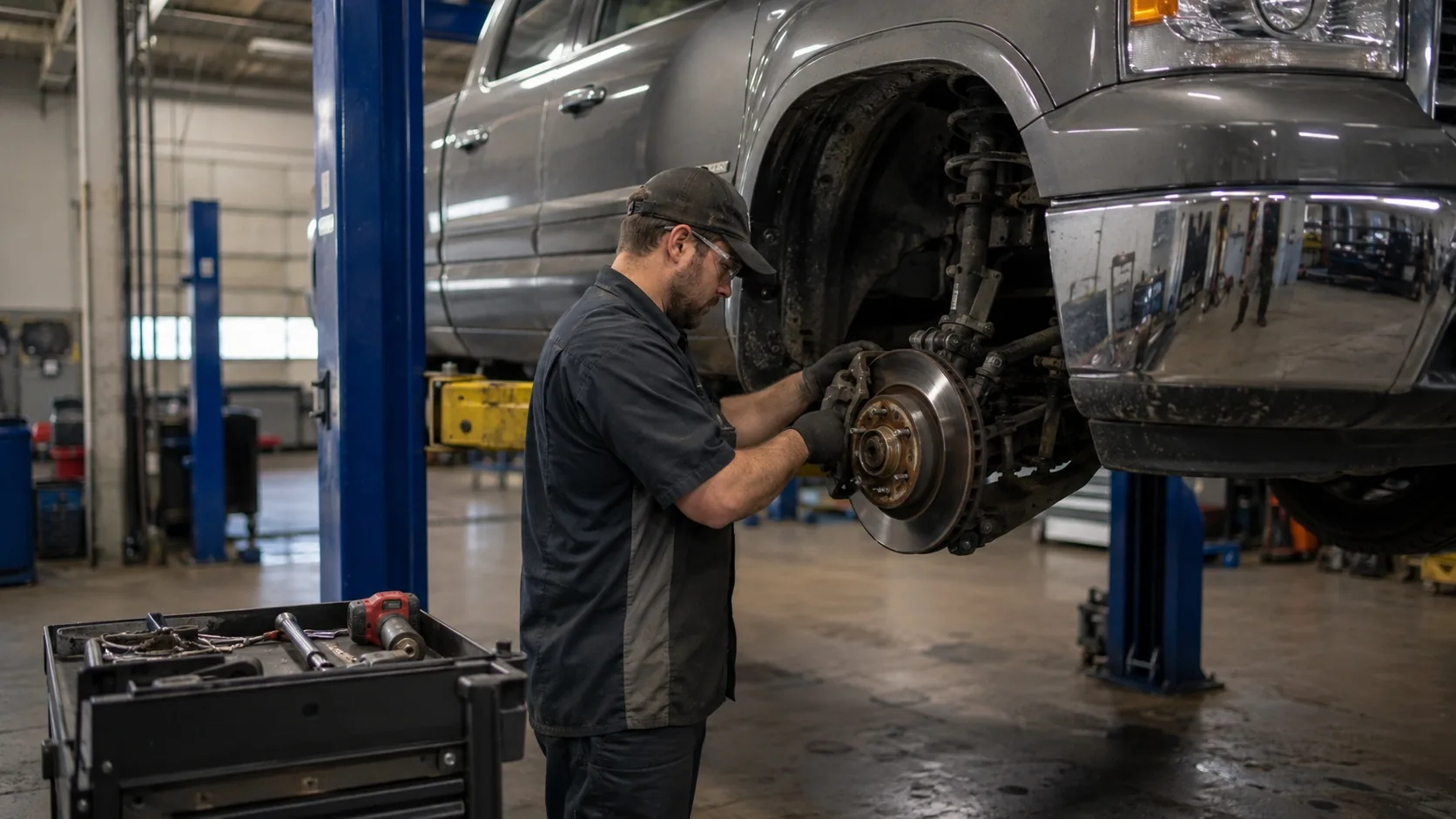
Brake Repair
That high-pitched squeal is usually your brakes doing exactly what they're designed to do - warning you early. Here's what it means and when it's more than just noise.
What’s Going On
A squeal when you brake is often the brake pad's built-in wear indicator doing its job. Most pads have a small metal tab that's designed to contact the rotor once the friction material wears down to a certain point, and that contact makes a high-pitched squeal on purpose - it's an early warning before you get to grinding.
Squealing can also come from glazed pads, brake dust buildup, humidity or morning dew sitting on the rotors overnight, or just the particular pad material on your car. A squeal that only happens on the first stop or two of the day and goes away is often just surface rust or moisture and isn't something to worry about.
The tricky part is that both the harmless kind and the early-warning kind sound pretty similar to the ear, so it's worth having the actual pad thickness checked rather than guessing from the noise alone.
How Urgent Is It?
Occasional or first-stop squealing is usually low urgency - it's common and often just moisture or dust. Squealing that's constant, happens on every stop, or has gotten noticeably louder over the past few weeks is worth scheduling a check sooner rather than later, since it can mean the pads are approaching the end of their friction material.
If the squeal turns into a grinding sound at any point, that's a sign the pads have worn through and it's time to get it looked at promptly.
What to Expect
We check pad thickness on all four wheels to see whether the squeal is an early warning tab, glazing, or just surface conditions.
We also look at hardware, shims, and the rotor surface, since squealing can come from vibration in the caliper hardware, not just the pad itself.
Depending on what we find, the fix might be as simple as cleaning and re-lubricating hardware, or it might mean new pads if they've reached their wear limit.
Questions
That's usually just moisture or a light layer of surface rust that builds up on the rotors overnight, especially with Michigan humidity and dew. The first stop or two of the day scrubs it off and the noise typically goes away. If it keeps happening well after the first stop, or shows up throughout the day, it's worth having the pads checked instead of assuming it's just morning moisture.
It can be - many pads have a built-in wear indicator tab that's designed to squeal once the friction material gets low, as an early warning before metal-on-metal grinding starts. Not every squeal means worn pads, but a squeal that's constant or getting louder over time is worth having checked so you know which situation you're in.
You can for a little while if it's occasional and mild, but a squeal that's steady or worsening usually means something is changing in the brake system even if the pedal still feels normal. Pedal feel and pad wear don't always change at the same rate, so it's worth having the actual pads inspected rather than relying on pedal feel alone.
Pad material does affect noise level - some compositions run quieter than others, and that varies by vehicle and pad type rather than price alone. If squealing bothers you and the pads check out fine wear-wise, it's worth asking what pad options are available for your vehicle, since some are formulated to run quieter.
A quick inspection tells you if it's normal or an early warning.

Also From the Lasco Family
Two Lasco stores, both a short drive away.
New Mitsubishi and used vehicles of every make, right here at 5470 Ali Drive.
Browse InventoryNew Ford trucks and SUVs, 35+ years in business, two-time Ford President’s Award winner.
Visit Lasco Ford