Grand Blanc Mitsubishi
New Mitsubishi and used vehicles of every make, right here at 5470 Ali Drive.
Browse Inventory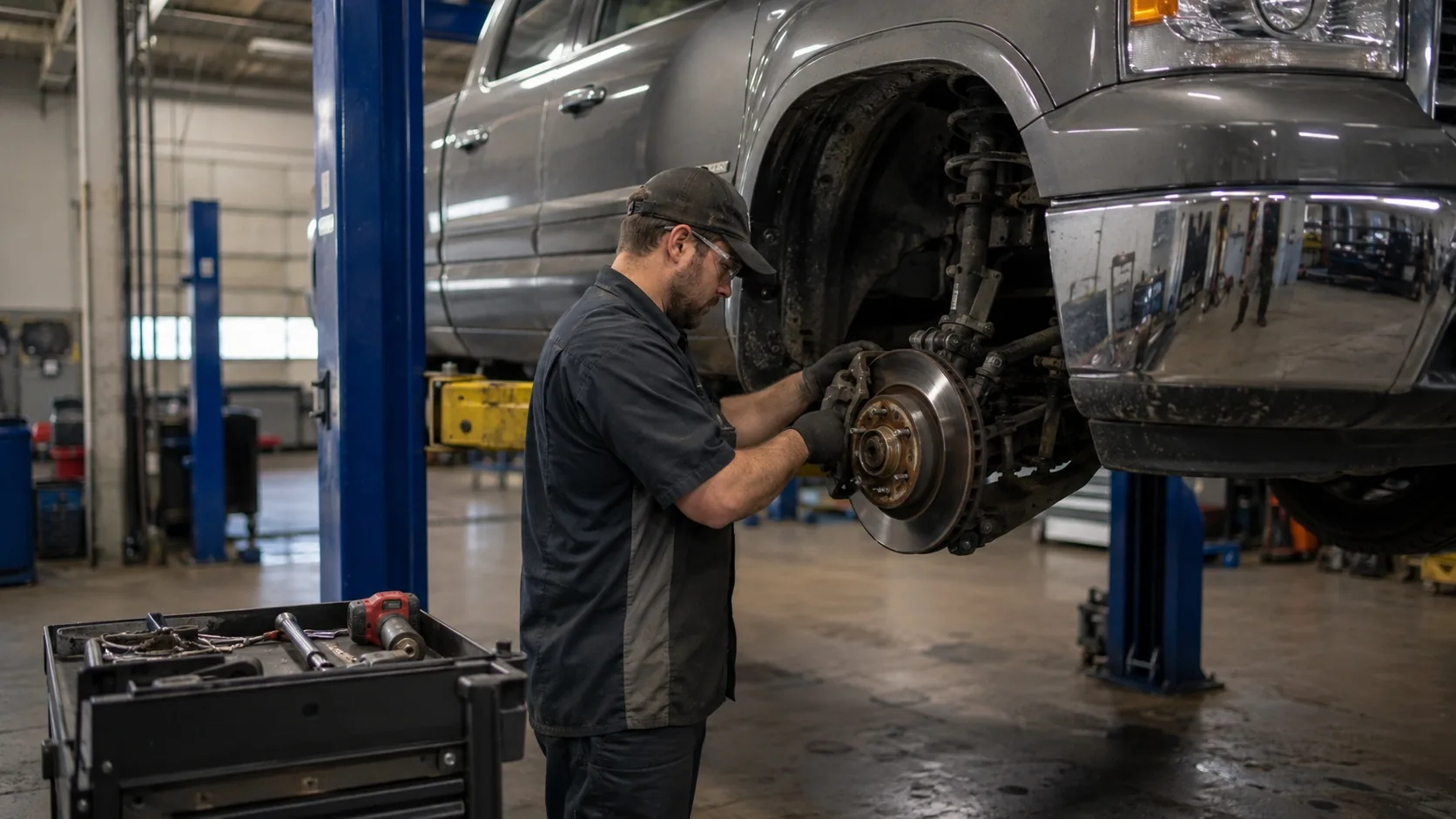
Brake Repair
That pulsing or vibration through the wheel is almost always coming from the brake rotors, not the steering itself. Here's what's causing it and what to do next.
What’s Going On
A shaking or pulsing steering wheel when you brake is a classic sign of warped or unevenly worn brake rotors. As the rotor spins, its thickness varies slightly from spot to spot, so the pad grips unevenly with every rotation and you feel that as a rhythmic shake through the wheel and sometimes the pedal too.
Rotors usually get like this from heat. Hard stops, riding the brakes down a long grade, or towing can heat the rotor unevenly, and as it cools it can develop high and low spots or a slight warp. Stop-and-go traffic around Grand Blanc and the S Saginaw corridor can add up to exactly that kind of repeated heat cycling over time.
Less often, the shake is from a loose wheel bearing, an out-of-round tire, or uneven lug torque, which is part of why it's worth having someone actually look rather than assuming it's the rotors.
How Urgent Is It?
A shaking wheel on its own isn't usually an emergency - the brakes are still working, just less smoothly. That said, it tends to get worse over time rather than better, and it's uncomfortable and distracting at highway speed, which matters for safety in its own way.
It's worth getting checked within the next week or two rather than letting it go all season. If the shake is severe, gets noticeably worse in a short time, or comes with a pulling sensation or noise, move it up the priority list and get it looked at sooner.
What to Expect
We check how much the rotor varies in thickness around its face and compare it to spec, which tells us whether it's resurfacing territory or replacement territory.
Since a shake can come from a bearing, tie rod, or tire instead of the rotor, we look at the related suspension and steering components while the wheel's off.
That might mean resurfacing or replacing rotors and pads together, or addressing whatever else the inspection turns up so the shake doesn't come back.
Questions
It's usually more uncomfortable than dangerous in the short term, since the brakes are still stopping the car - they're just doing it unevenly. That said, it tends to get worse with more heat cycles, and a severe shake at highway speed is distracting in a way that matters for safety. It's worth having it looked at within a week or two rather than letting it ride all season.
Sometimes, yes - if there's enough material left on the rotor, resurfacing (machining it flat again) can solve the problem. If the rotor has already been resurfaced before or is too thin to safely machine again, replacement is the better call. Which option makes sense depends on measuring the actual rotor thickness, not guessing.
Rotor-related shaking tends to show up more noticeably at higher speeds because the rotor is spinning faster, so the uneven high and low spots cycle past the pad more times per second and the vibration becomes easier to feel through the wheel. At lower speeds the same unevenness is there, it's just less pronounced.
It's possible - an out-of-round tire, a bent wheel, or uneven tire wear can also cause a shake, and sometimes that shake is more noticeable under braking even though it's tire-related. That's part of why a proper inspection looks at rotors, wheel bearings, and tires together rather than assuming one cause up front.
Bring it in and we'll pinpoint whether it's rotors, a bearing, or something else.

Also From the Lasco Family
Two Lasco stores, both a short drive away.
New Mitsubishi and used vehicles of every make, right here at 5470 Ali Drive.
Browse InventoryNew Ford trucks and SUVs, 35+ years in business, two-time Ford President’s Award winner.
Visit Lasco Ford