Grand Blanc Mitsubishi
New Mitsubishi and used vehicles of every make, right here at 5470 Ali Drive.
Browse Inventory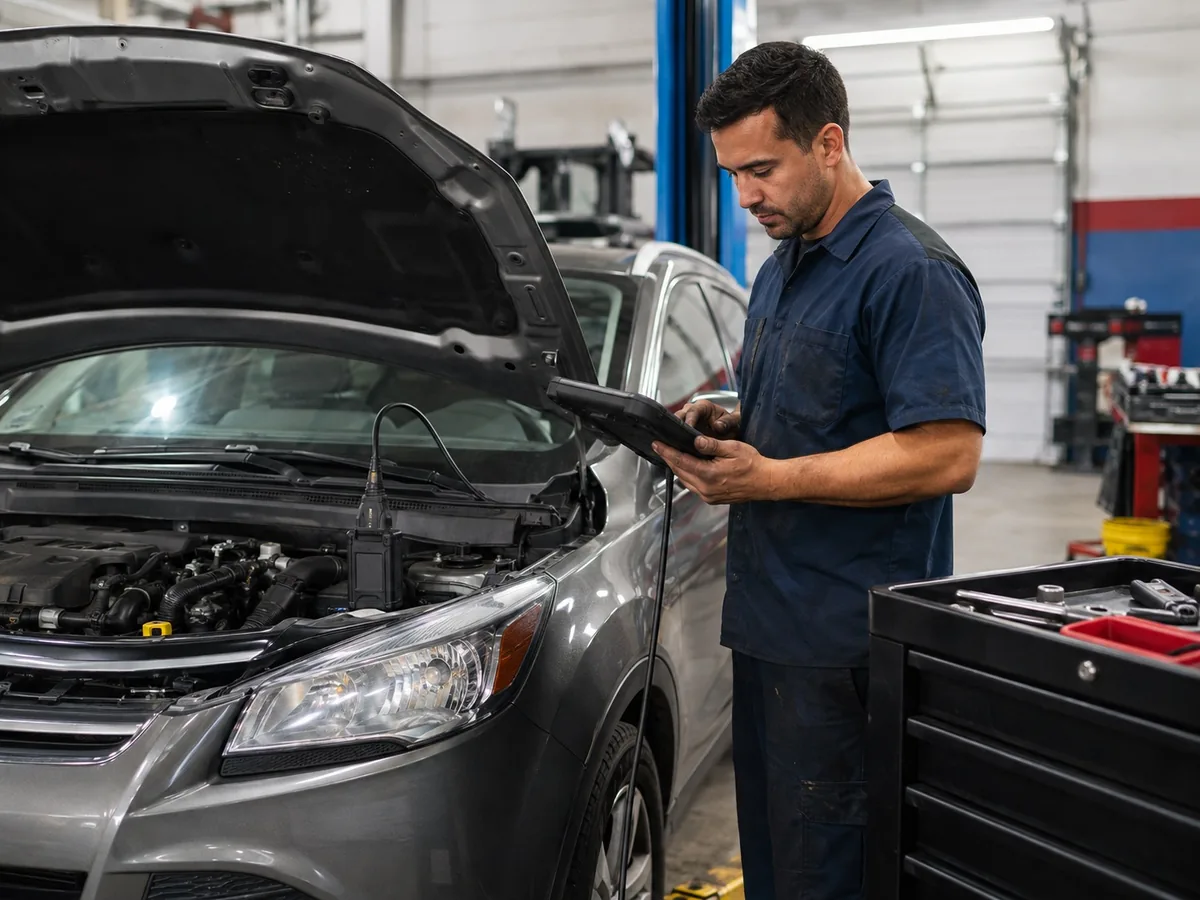
Check Engine & Diagnostics
A temperature gauge climbing toward red in stop-and-go traffic is one of the more urgent things your dashboard can tell you. Here's what's likely going on and what to do before it becomes a bigger repair.
What’s Going On
Overheating that shows up specifically in slow traffic, rather than at highway speed, often points to a cooling system that's struggling without the extra airflow a moving car gets. A failing radiator fan, a low coolant level from a leak, a stuck thermostat, or a clogged radiator are all common causes worth ruling out.
It can also be something less obvious — a failing water pump that isn't circulating coolant properly, a radiator cap that isn't holding pressure, or air trapped in the cooling system after a previous repair. The traffic pattern is a useful clue, but it doesn't narrow things down to one answer on its own.
How Urgent Is It?
If your temperature gauge is climbing toward the red zone or a warning light comes on, the safest move is to find a safe place to pull over, shut the engine off, and let it cool before continuing. Driving on an overheating engine risks warping a cylinder head or blowing a head gasket — both bigger and more involved repairs than whatever caused the overheating in the first place.
Don't open the radiator cap while the engine is hot. Once the engine has cooled, a short drive to a shop is usually fine, but if the gauge climbs again, pull over and stop rather than pushing through.
What to Expect
We check coolant level and condition, look for visible leaks, and test the radiator cap, thermostat, and cooling fans to see which part of the system isn't doing its job.
If the engine's computer logged anything related to temperature or cooling fan operation, factory-level scan tools help confirm what it saw and when.
We pressure-test the cooling system to find leaks that aren't obvious from a visual check alone, including ones inside the engine that show up as coolant loss without a puddle underneath.
Questions
At highway speed, air moving through the grille helps cool the radiator even without help from the fans. In slow traffic, that airflow disappears, so the cooling fans have to do the work alone — if a fan isn't running, isn't running fast enough, or the system is already low on coolant, traffic is where it shows up first. It's a genuinely useful clue for narrowing down the cause.
A gauge that drops back to normal after climbing doesn't mean the issue resolved itself — something caused that climb, and it can happen again, often at a worse moment. It's reasonable to finish a short, careful drive to a shop, but treat a gauge that spiked once as a reason to get the cooling system checked soon rather than waiting to see if it happens again.
Continuing to drive while the engine is overheating risks warping the cylinder head, blowing the head gasket, or in more severe cases, seizing the engine — all repairs that are significantly bigger than whatever caused the overheating to begin with. That's why the standard advice is to pull over and let it cool rather than trying to make it to your destination first.
Low coolant can absolutely cause overheating on its own, especially from a slow leak that's gone unnoticed. But topping it off without finding out why it was low just delays the same problem from coming back. We'll check whether it's a simple level issue or a leak, fan, or thermostat problem underneath it before recommending anything.
If your engine has been running hot in traffic, don't wait for it to happen again — bring it in and we'll find out why.
Also From the Lasco Family
Two Lasco stores, both a short drive away.
New Mitsubishi and used vehicles of every make, right here at 5470 Ali Drive.
Browse InventoryNew Ford trucks and SUVs, 35+ years in business, two-time Ford President’s Award winner.
Visit Lasco Ford