Grand Blanc Mitsubishi
New Mitsubishi and used vehicles of every make, right here at 5470 Ali Drive.
Browse Inventory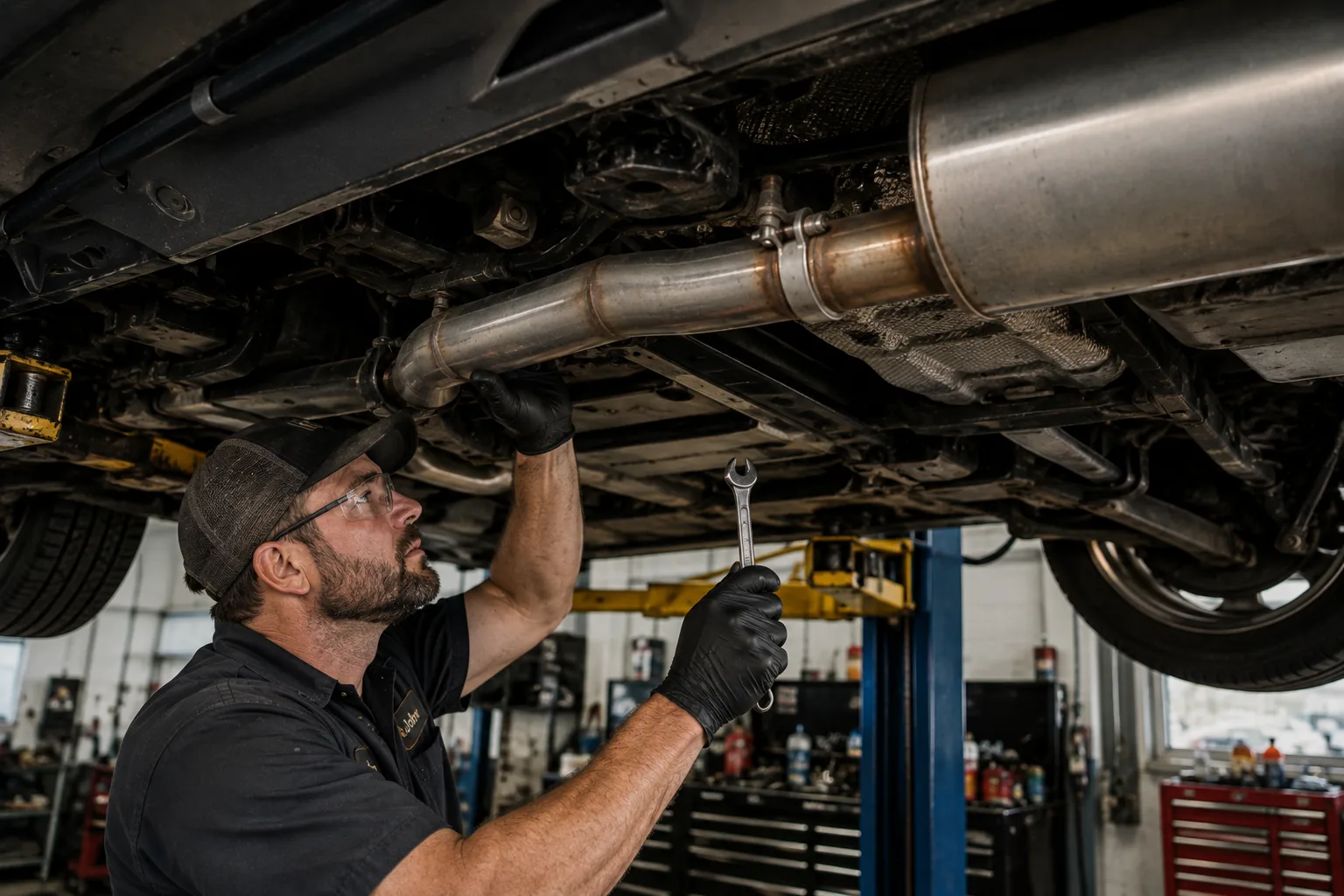
Exhaust & Muffler
That sulfur smell means something in the fuel system isn't burning the way it should. It's worth getting looked at soon, though the exact cause can be one of a few different things.
What’s Going On
The rotten-egg smell comes from sulfur compounds naturally present in gasoline. Normally, the catalytic converter breaks those compounds down into odorless gases before anything reaches your tailpipe. When you can smell sulfur, something in that process isn't finishing the way it's supposed to.
A catalytic converter that's aging, clogged, or has been damaged by heat is the most common reason this happens, and it's usually where a diagnosis starts. But it isn't the only possible cause. An engine running rich — sending more unburned fuel toward the converter than it can process — can produce the same smell even with a converter that's otherwise fine, and a handful of other fuel and engine issues can contribute as well.
Because more than one thing can produce this exact smell, it isn't something we'd diagnose from a description over the phone. It takes a look at the vehicle, and usually a scan of what the engine's computer is seeing, to say with confidence what's actually going on — which is a big part of why we'd rather get it in front of a technician than guess at it sight unseen.
How Urgent Is It?
A rotten-egg smell deserves more prompt attention than most exhaust noises, but it isn't cause for alarm. It's not an immediate safety issue for a short drive, but the underlying cause is often tied to how efficiently your engine is running and how well it's controlling emissions, and that's worth addressing before it affects performance or fuel economy further.
If the smell shows up alongside a check engine light, rough idling, or a noticeable drop in power, treat those together as a reason to get in sooner rather than later. On its own, and without other symptoms, it's still worth scheduling a visit in the near future rather than waiting it out. Because a handful of different issues can produce the same smell, the goal on your first visit is an accurate diagnosis, not a guess based on the symptom alone.
What to Expect
A technician connects to your car's onboard computer to check for stored codes and see how the engine's fuel and oxygen readings compare to what's expected.
We look at the converter itself along with the sensors and components that feed it, since the smell can originate from more than one place upstream.
Once we know whether it's the converter, a fuel mixture issue, or something else, we walk you through what's actually needed — not just what might be needed.
Questions
It's the most common cause, but not the only one. An engine running too rich, certain sensor issues, or other fuel-system problems can produce a similar smell even when the converter itself is still functioning. That's why a proper diagnosis involves a scan and a physical inspection rather than assuming based on the smell alone.
A short trip generally isn't dangerous, but the smell is a signal that something in your fuel or emissions system isn't working the way it should, and that condition tends to affect performance or fuel economy over time. It's worth getting it looked at in the near future rather than treating it as background noise.
A catalytic converter that isn't processing exhaust properly is often the same reason a vehicle fails an emissions test, since the two issues are closely related. Whether your specific vehicle would fail depends on what's actually causing the smell, which is exactly what a diagnostic scan is meant to identify.
That's helpful, not a coincidence to ignore. A check engine light means the computer has already logged information about what it's seeing, and pulling those codes gives us a real head start on narrowing down the cause instead of starting from scratch.
A scan and a look at the converter will tell us what's actually going on — schedule a visit at our Grand Blanc service center and we'll walk you through it.
Also From the Lasco Family
Two Lasco stores, both a short drive away.
New Mitsubishi and used vehicles of every make, right here at 5470 Ali Drive.
Browse InventoryNew Ford trucks and SUVs, 35+ years in business, two-time Ford President’s Award winner.
Visit Lasco Ford