Grand Blanc Mitsubishi
New Mitsubishi and used vehicles of every make, right here at 5470 Ali Drive.
Browse Inventory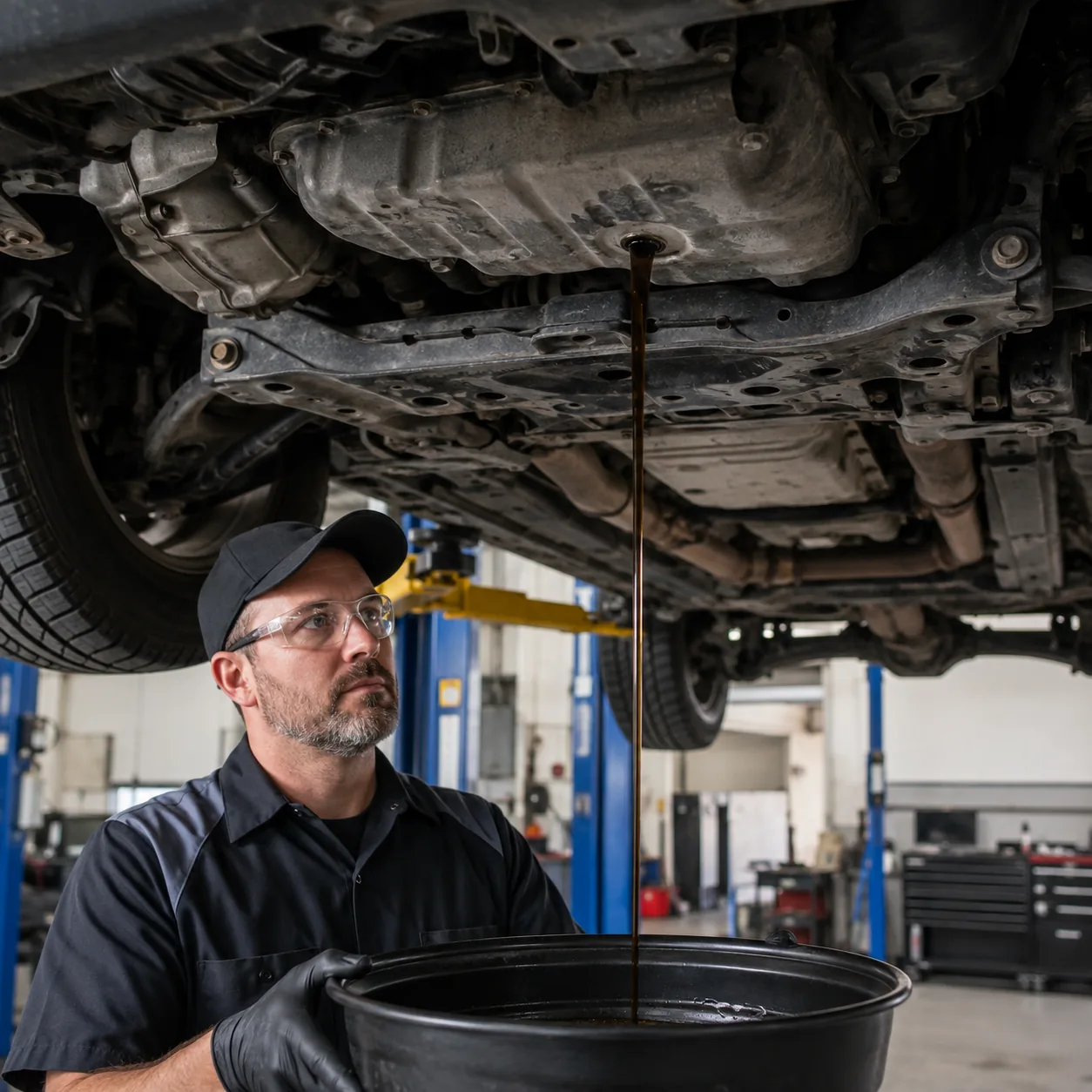
Transmission Service
A reddish or brownish puddle under the car isn't always a transmission problem, but it's always worth identifying. Here's how to tell what you're looking at.
What’s Going On
Fresh transmission fluid typically runs reddish and translucent, while older fluid darkens toward brown as it ages and picks up heat and wear particles. That color range is the main clue that separates it from motor oil, which is usually amber to dark brown but noticeably thicker and never has that reddish tint when fresh. If you're not sure which you're looking at, a paper towel test under the spot and a look at where it's dripping from front, middle, or rear of the vehicle helps narrow it down, but a technician can usually tell in seconds.
Once it's confirmed as transmission fluid, the source is usually one of a handful of places: a worn pan gasket or loose pan bolts, a failing seal where the transmission meets the engine or driveshaft, a cracked or loose fluid line, or a worn seal on the dipstick or fill tube. None of these point to the transmission itself being damaged — they're leak points, not internal failures, though a leak left alone long enough can eventually starve the transmission of the fluid it needs to function properly.
How much is leaking and how fast matters as much as the fact that it's leaking at all. A small drip after sitting overnight is a very different situation than a puddle forming in the time it takes to run an errand, and that difference changes how soon it needs attention.
How Urgent Is It?
A slow, minor leak is worth scheduling promptly but usually doesn't require stopping what you're doing. Keep an eye on the fluid level between now and your appointment if you're comfortable checking it, since running low enough to cause slipping or hard shifting turns a simple seal fix into a bigger conversation.
A fast leak, a large puddle, or fluid loss paired with slipping, hard shifts, or a warning light is a different situation — that combination means the transmission may already be running low, and it's worth getting in sooner rather than continuing to put miles on it.
What to Expect
We confirm the fluid is actually transmission fluid, check the current fluid level, and trace the leak to its actual source — pan, seal, line, or fitting — usually with the vehicle up on a lift.
We'll point out exactly where it's coming from and explain what that means for your vehicle, so you know whether you're looking at a simple gasket or something more involved.
You'll have a written estimate in hand before any repair starts, covering the actual source of the leak rather than a guess at one.
Questions
Color and texture are the biggest tells. Fresh transmission fluid is reddish and fairly thin, aging toward brown over time. Motor oil is amber to dark brown or black and noticeably thicker and slicker between your fingers. Location helps too — transmission fluid usually drips from farther back under the vehicle than an oil leak. If you're genuinely unsure, that's a quick confirmation for a technician rather than something to guess at yourself.
For a short period, usually yes, especially if it's a slow drip and the fluid level is still in range. The real risk isn't the leak itself, it's what happens if the fluid level drops low enough to affect shifting — that's when a simple seal repair can turn into more serious wear. Get it looked at promptly rather than waiting for it to become a bigger puddle.
No, and this is a common misconception. Most leaks trace back to an external seal, gasket, or fitting rather than anything inside the transmission itself. Those are generally straightforward repairs. A rebuild only enters the conversation if fluid loss went unnoticed long enough to cause internal damage, which is exactly why catching a leak early matters.
A leak can start small and stay small for a while before it affects how the vehicle drives, since the transmission can run normally right up until fluid drops below the level it needs. That's actually the best time to catch it — before it starts affecting shifting. Don't wait for a symptom to show up before getting a leak checked.
Bring it in and we'll trace the leak and check your fluid level before recommending any repair.

Also From the Lasco Family
Two Lasco stores, both a short drive away.
New Mitsubishi and used vehicles of every make, right here at 5470 Ali Drive.
Browse InventoryNew Ford trucks and SUVs, 35+ years in business, two-time Ford President’s Award winner.
Visit Lasco Ford