Grand Blanc Mitsubishi
New Mitsubishi and used vehicles of every make, right here at 5470 Ali Drive.
Browse Inventory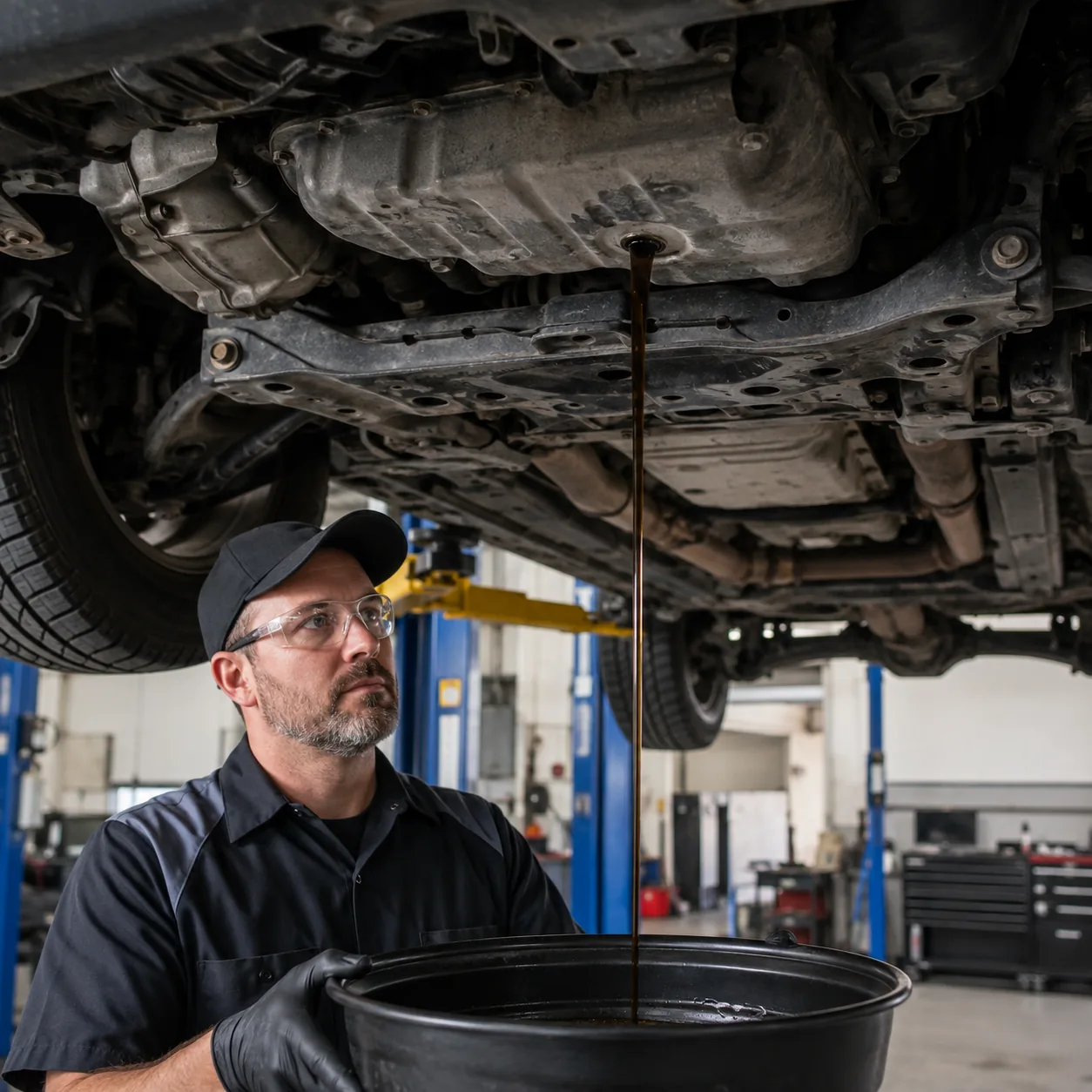
Transmission Service
Your RPMs climb but the car doesn't catch up, or there's a pause before it grabs a gear. Here's what that usually means and how urgent it is.
What’s Going On
Transmission slipping shows up as the engine revving higher than it should for your speed, a hesitation before the transmission engages after you shift into drive or reverse, or a sensation that the car is momentarily "free-wheeling" between gears. It can happen at low speed, at highway speed, or only when the transmission is cold or hot.
The range of causes runs from simple to serious. Low or degraded transmission fluid is one of the most common culprits, since fluid that's low, burnt, or contaminated can't build the pressure the transmission needs to hold a gear. A failing solenoid, a worn clutch pack (on an automatic) or clutch assembly (on a manual), or a computer module misreading conditions can all produce the same symptom.
Because several very different problems all feel like "slipping" from the driver's seat, this is exactly the kind of symptom where guessing at a fix from a search result can send you down the wrong road. The only way to know which of these is actually happening in your vehicle is to get it looked at on a lift with the right diagnostic tools.
How Urgent Is It?
Slipping is worth prompt attention rather than a stop-the-car-now emergency for most drivers. It's usually safe to drive to your appointment, but continuing to drive on a slipping transmission for an extended period can accelerate wear on internal components that were otherwise fine.
The exceptions are worth knowing: if slipping is paired with a burning smell, grinding, a transmission warning light, or the vehicle refusing to move in any gear, treat that as more urgent and get it in sooner rather than later. If it's an occasional, mild hesitation, you have some room to schedule around your week — just don't let it sit indefinitely.
What to Expect
We start by checking fluid level, color, and condition, then pull any stored codes and road-test the vehicle to see exactly when and how the slip happens. That tells us whether we're looking at a fluid issue or something deeper.
Before anything is repaired, we walk you through what the inspection turned up in plain language — what's actually wrong, what it affects, and what the range of fixes looks like for your specific vehicle.
You get a written estimate before work begins, so you're deciding with full information rather than after the fact. Nothing moves forward until you say go.
Questions
Yes, it's one of the most common causes. Transmission fluid isn't just a lubricant — it creates the hydraulic pressure that holds each gear engaged. When the level drops or the fluid breaks down, that pressure can't build properly, and the transmission slips or hesitates before catching. It's also one of the easier issues to confirm, since a technician can check fluid level and condition in minutes during a diagnostic.
For most drivers, yes, for the short term, especially if the slip is mild and occasional. That said, driving on it longer than necessary can add wear to components that a fluid service or minor repair might have addressed on their own. If the slipping is frequent, severe, or paired with a warning light, minimize driving and get it looked at sooner.
No. A rebuild or replacement sits on the far end of a wide range of possible causes, and it's not where most cases land. Many slipping complaints trace back to fluid condition, a sensor, or a solenoid — all repairable without replacing the transmission itself. The only way to know where your vehicle falls on that range is a proper diagnostic, which is exactly where we'd start.
Yes, though it looks a little different. On an automatic, slipping usually means the engine revs without the car accelerating, or gears change late or roughly. On a manual, it more often shows up as the RPMs jumping when you're not pressing the clutch, typically pointing to a worn clutch disc. Either way, the same starting point applies: get it diagnosed before assuming what's wrong.
Bring it to our Grand Blanc service drive and we'll diagnose it properly before recommending anything.
Also From the Lasco Family
Two Lasco stores, both a short drive away.
New Mitsubishi and used vehicles of every make, right here at 5470 Ali Drive.
Browse InventoryNew Ford trucks and SUVs, 35+ years in business, two-time Ford President’s Award winner.
Visit Lasco Ford